
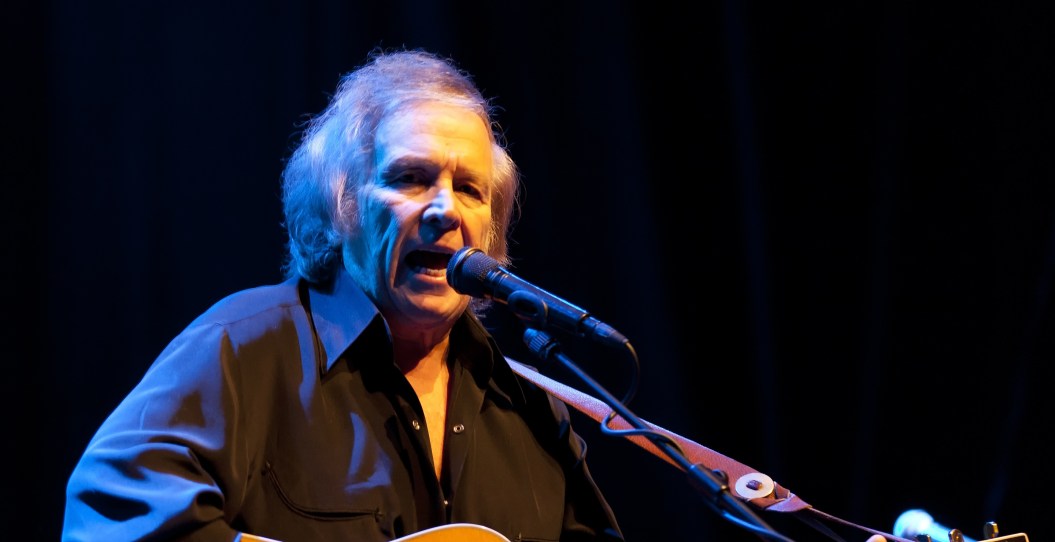
Maybe you have favorite songs that you listen to over and over without knowing their origin. Being aware of what inspired a song can deepen your appreciation of it immensely. It's like gazing at a work of fine art and suddenly realizing what it came out of in the painter's lived experience. So we have taken a look at tragic stories behind four classic rock hits to unearth their mournful roots. You will probably never contemplate them the same way again.
Videos by Wide Open Country
Tragic Stories Behind Four Classic Rock Hits
'American Pie' by Don McLean (1971)
The peppy song that Don McLean made so famous sounds innocent enough. But it describes what is widely known as "the day the music died." Per Forbes, "The song is part of American culture, people young and old know the lyrics, and it's been recorded by artists like Garth Brooks, Madonna, and Jon Bon Jovi, just to name a few."
Although the tune is bouncy and insouciant, it has a dark backstory. The outlet explains that "McLean wrote the song, much of it biographical, as a reflection of what was happening in America...." That includes the assassinations of Martin Luther King, Jr., and the Kennedy brothers, plus the carnage of Vietnam. It also encompasses the plane crash in Iowa on February 3, 1959 that claimed the lives of musicians Buddy Holly, Ritchie Valens, and J.P. Richardson, also called "The Big Bopper." The music did indeed die that awful day.
'Ohio' by Crosby, Stills, Nash & Young (1971)
Per grunge.com, "The song's opening lyrics tell the story of the 1970 Kent State massacre...." The lyrics are fittingly laden with rage, grief, and incomprehension. Released during an era of seismic social unrest and turmoil, this song conveys the feelings of a shattered and shocked nation, especially the way its youth was impacted.
When Ohio National Guard troops sought to disperse a Vietnam War protest at the Kent State campus on May 4, 1970, they fired their weapons right into a crowd. Four people thus lost their lives. Eight were injured, one was paralyzed. The reverberations stunned America. Neil Young grabbed his pen and furiously started writing.
Per performingsongwriter.com, "Pop-culture historian and journalist David Bianculli said: 'It was the quickest and best reaction to Kent State, with Neil Young acting as 50 percent songwriter and 50 percent journalist.'"
'Riders on the Storm' by The Doors (1971)
Everyone knows The Doors for their hard-edged rock anthems and their baby-faced, culturally anarchic frontman, Jim Morrison (1943-1971). "Riders on the Storm" was on the band's sixth album, L.A. Woman. Ray Manzarek, a member of The Doors, told This Is Dig four years ago via grunge.com that "Riders" was about "serial killer Billy Cook, who murdered six people (including a family of five) during a gruesome killing spree that spanned from 1950 until 1951." He called it "a very filmic song." Cinematic or not, it is a truly memorable piece of The Doors' musical lore.
'Smoke on the Water' by Deep Purple (1972)
From the album Machine Head, "Smoke on the Water" refers to an actual inferno. Per Songfacts, "This song took inspiration from a fire in the Casino at Montreux, Switzerland on December 4, 1971. The band was going to start recording their Machine Head album there right after a Frank Zappa concert, but someone fired a flare gun at the ceiling during Zappa's show, which set the place on fire." That event became the fodder for one of Deep Purple's most emblematic and unforgettable tunes.


