

There was "a cultural earthquake" in America on February 9, 1964. Its epicenter was in New York City at 1697 Broadway. That is where the nation's premier weekly TV variety program, The Ed Sullivan Show, took place in front of a packed live audience. On that cold February night, the Beatles took the stage for the first and most impactful of several groundbreaking appearances. Gaggles of girls lucky enough to be in the 728-seat theater manically shrieked and screamed without let-up. Contemporary music and society would never be quite the same. John Lennon, Paul McCartney, George Harrison, and Ringo Starr, all in their early twenties, tossed out all the old rules and gleefully wrote their own. Nobody else looked or sounded like they did. And we loved them for it.
Videos by Wide Open Country
Gathered around their TV sets were 73 million Americans, a heretofore unheard-of mass viewership. Many of them were giddy about being in the frenzied throes of a condition known as Beatlemania. These four cheeky, wholesome English lads in collarless suits and sporting mop-top haircuts took the country by storm from the moment they arrived in the Big Apple two days earlier. Barely three months after the November 1963 assassination of President John F. Kennedy, people wanted to cast off their gloom and frolic again, party again, and shimmy with abandon to infectious tunes like "She Loves You" and "I Want To Hold Your Hand."
'The Ed Sullivan Show' Was In The Vanguard Of The So-Called British Rock 'N' Roll Band Invasion
The Ed Sullivan Show also brought Elvis to the public's widespread attention when he was just a 21-year-old, swivel-hipped phenom. British rock bands galore graced the stage as well. The Rolling Stones, The Animals, The Dave Clark Five, and Herman's Hermits were among the tide of youthful musicians from across the pond who found a welcoming home on the program. American teens got inspired and dreamed of emulating their drum-playing, guitar-riffing idols.
It would not be a stretch to say that this show, which aired from 1948 until 1971, was one of the most influential forces in the early evolution and popularization of rock. At a bygone time when the television set served as our collective electronic hearth, Ed Sullivan was both guru and master showman.
Who Was Ed Sullivan?
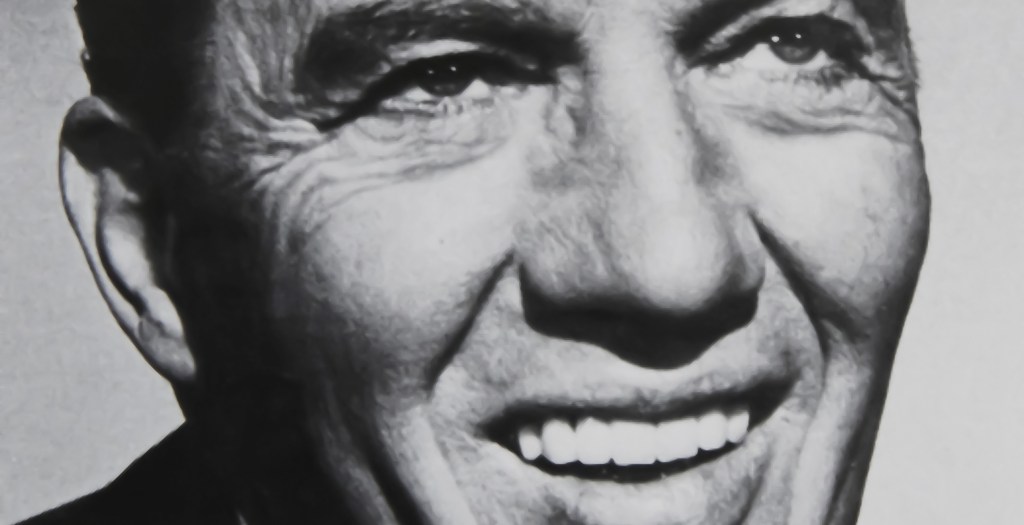
The architect of all this glorious musical mayhem was none other than Ed Sullivan (1901-1974) himself. He was an unlikely advocate for mold-busting young rockers like The Beatles and Elvis Presley. Sullivan wasn't particularly handsome. He was not suave or urbane. On camera, he often appeared fidgety and ill-at-ease. But he was peerless when it came to sensing exactly what the public wanted to see and bringing it to them.
Performers On The Show Represented A Wide Range Of Talents
His guests included legions of comics, sophisticated opera singers like Maria Callas, adorable puppet acts, and unique individuals such as Tiny Tim who defy categorization. The Ed Sullivan Show was a grab-bag containing something for every age and taste in entertainment. Low-brow kitsch and high-brow culture happily co-existed there.
Sullivan could sniff out a hot new trend in its nascent stage and capitalize on it before anyone else got wind of it. In the wise-cracking words of comedian Alan King per Ed Sullivan's web site, "Ed Sullivan can't sing, can't dance and can't tell a joke, but he does it better than anyone else."
He Was Originally A Newspaper Reporter Who Gravitated To The Glitz Of Show Biz
Per edsullivan.com, he was a New York-based newspaper reporter who later hosted "radio programs with Broadway themes." He was gallivanting on the town constantly. Sullivan was prone to "eating out five nights a week at some of the trendiest clubs and restaurants - The Stork Club, Danny's Hideaway and Jimmy Kelly's. Ed would hobnob with the rich and famous, was friends with U.S. Presidents and would even receive audiences with various Popes."
Sullivan graduated to a new, fledgling medium that took hold fast in thriving post-war America - television. TV was definitely here to stay. Its immediacy and novelty dazzled people. In 1948, CBS let Sullivan in on the action by giving him a show of his own. Titled Toast of the Town, it was called The Ed Sullivan Show as of 1955. A tradition was born. One that had a seismic and incomparable effect across America and beyond.
Greet The Beatles, America!
The Beatles Perform "I Want To Hold Your Hand" On The Ed Sullivan Show, February 9, 1964
With Ed Sullivan's words, "Ladies and gentlemen, the Beatles. Let's bring them on...," the Fab Four began their first set. The mood was thrilling. Everyone who was present watched agog as they swung into hit songs like "All My Loving," the mellow romantic ballad "Till There Was You," and "She Loves You." Despite their youth and relative inexperience, the band was utterly confident, spontaneous, and having fun. The onlookers in the studio and at home were practically levitating with ecstasy.
During a brief commercial pause, no one could calm down. It felt as though a tornado had just swept through. Other acts were booked on the show, and the ever-courteous Sullivan didn't want them to be eclipsed by the Beatles. Per his web site, he jokingly cautioned the audience, "If you don't keep quiet, I'm going to send for a barber," referring to the group's signature shaggy locks.
They again took the stage for their next set, which featured "I Saw Her Standing There" and "I Want To Hold Your Hand." Again, they sang amidst non-stop raucous pandemonium from their fans. Even petty crime seemed to take a breather while the Beatles performed. Per rockandrollglobe,com, "It was said that throughout New York City, not a single hubcap was stolen when The Ed Sullivan Show was aired; 'Even the criminals had a rest!' [George] Harrison later observed."
The Aftermath
Stodgy news media outlets scoffed at the Beatles. According to the outlet, The New York Herald-Tribune haughtily declared the band was "Seventy-five percent publicity, twenty percent haircut, and five percent lilting lament." The New York Times was similarly unmoved. dismissing the Beatles as "a fine mass placebo." Reading such misinformed comments today prompts a chuckle.
These and other short-sighted naysayers were in the dour minority. America was infatuated and it wasn't a fleeting summertime crush. This was the real thing, a recognition that four geniuses had arrived on our shores and were going to continue massively shaking things up. They kissed the status quo goodbye forever, booted it out the door, and ushered in something fresh, trailblazing, valid, and enduring. Ed Sullivan gave them the ideal platform to do it.
Other rock groups from the early 1960s were sensational. The Beatles were transformative.
The Band's Landmark Appearance On Television Changed The Careers Of Many Famous Performers
Seeing the Beatles on The Ed Sullivan Show made a volcanic impression on many people who later achieved fame in the music industry themselves. Some of them shared their thoughts per ultimateclassicrock.com.
Dee Snider (via Louder): "I was eight years old when this [I Want To Hold Your Hand] was released, and after hearing it on the radio, and then seeing that legendary Ed Sullivan show performance, that was it, I wanted to be a Beatle. I quickly realized that I couldn't actually be a Beatle, but I could be a rock star, and that plan never changed."
Joe Perry (via Music Radar): "Seeing them on TV was akin to a national holiday. Talk about an event. I never saw guys looking so cool. I had already heard some of their songs on the radio, but I wasn't prepared by how powerful and totally mesmerizing they were to watch. It changed me completely. I knew something was different in the world that night. Next day at school, the Beatles were all anybody could talk about."
Bruce Springsteen (via CBS News): "This was different, shifted the lay of the land. Four guys, playing and singing, writing their own material ... Rock 'n' roll came to my house where there seemed to be no way out ... and opened up a whole world of possibilities."
Kenny Loggins (via Stereogum): "I was a folk guy, Bob Dylan was my main hero — up until I saw the Beatles on Ed Sullivan. When Lennon and McCartney showed up, it was a whole different atmosphere. My mother told me about the Beatles on Ed Sullivan that night. I never took advice from her on what music to see — she's my mother! But she said, "There's this group I heard of, everyone's talking about them." Something pulled me to that to see who that was. It was life-changing for every musician I've ever spoken to from that era."
Steven Van Zandt (via Associated Press): "This was the main event of my life. It was certainly the major event for many others, whether or not they knew it at the time. For me, it was no less dramatic than aliens landing on the planet. ... There's no equivalent of that today, TV shows that literally everybody watched. All ages, all ethnic groups, all in black and white on a 14-inch screen. ... "
Nancy Wilson (via Believer): "The lightning bolt came out of the heavens and struck Ann and me the first time we saw the Beatles on The Ed Sullivan Show. ... There'd been so much anticipation and hype about the Beatles that it was a huge event, like the lunar landing: that was the moment Ann and I heard the call to become rock musicians. I was seven or eight at the time. ... They were really pushing hard against the morality of the times."
The Fate Of Ed Sullivan And The Beatles
Ed Sullivan died of esophageal cancer on October 13, 1974 at the age of 73. His show got canceled in 1971 after 23 exciting seasons, supposedly due to a dip in ratings. Sullivan's beloved wife, Sylvia, predeceased him in 1973.
The Beatles called it a day in 1970 following ten historic, tumultuous years. They made their final bow as a group that year, with the Let It Be album and concert film.
John Lennon was assassinated at The Dakota, where he lived, in New York City on December 8, 1980. He was 40 years old.
George Harrison died of cancer in Beverly Hills, California, on November 29, 2001. He was 58 years old.
Paul McCartney is 82 years old.
Ringo Starr is 84 years old.


