
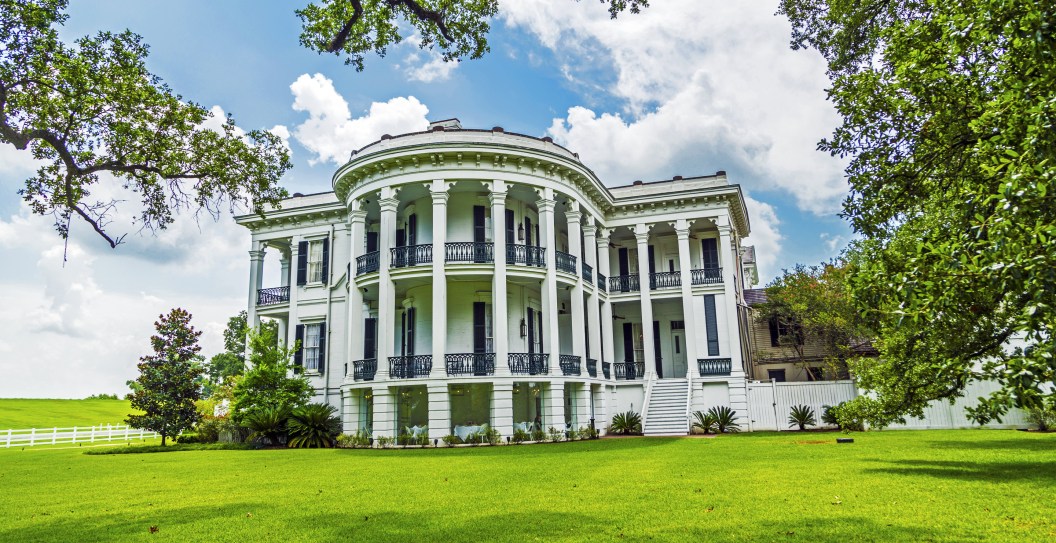
A mysterious fire has claimed the largest antebellum mansion in the South. As though a cleansing rage manifested by those who were victims of those it housed.
Videos by Wide Open Country
The Nottoway sugar plantation in White Castle, Louisiana, has burned to the ground after a fire broke out around 2 pm on Thursday, per ABC. The unforgiving rage of the fire has erased the historic monument of a more difficult time.
The wooden mansion had been standing for almost 200 years, since its construction in 1859. Slaves built the mansion for John Hampden Randolph, for the modern equivalent of roughly $3 million. Over the years, the 53,000 square feet of tortured ground became a museum and place of education.
But now the mansion has been consumed. A penance for its past that freed the trapped torment through the spilling smoke. An erasure of real history. The loss of the antebellum is almost as destructive and convoluted as the past it has become a beacon of.
Iberville Parish Mourns The Loss Of Nottoway Mansion
According to the outlet, a Louisiana fire marshal said that the fire that scorched Nottoway to cinders was "the biggest fire" they'd ever seen. No one was hurt despite the fire's magnitude.
Officials are still investigating the fire. An update will likely be provided when officials find out more. Diagnosing the cause of this fire will likely take a while, however, considering how much ground they have to cover.
On
Facebook, Chris Daigle of Iberville Parish made a statement about the burning of the Nottoway Mansion."Nottoway was not only the largest remaining antebellum mansion in the South but also a symbol of both the grandeur and the deep complexities of our region's past. While its early history is undeniably tied to a time of great injustice, over the last several decades it evolved into a place of reflection, education, and dialogue," they wrote.
"It stood as both a cautionary monument and a testament to the importance of preserving history — even the painful parts — so that future generations can learn and grow from it," they added.
Daigle concluded, "As we process this tragedy, let us recommit ourselves to protecting and honoring our shared history — not just in grand structures, but in the values we carry forward."


