
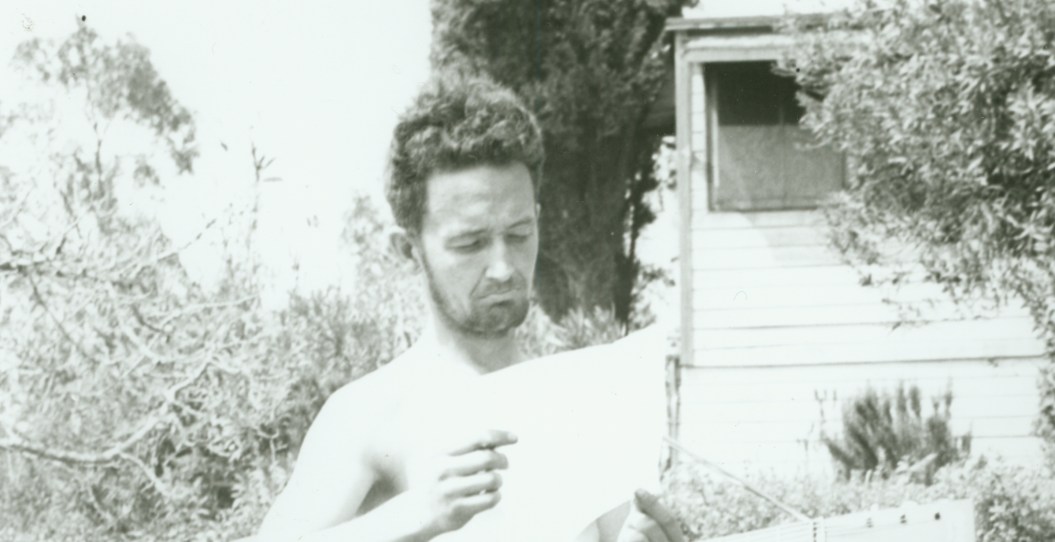
Today, July 14, is Woody Guthrie's birthday. Instead of his fans giving the late folk virtuoso a gift, he has a magnificent posthumous one for all of us dropping next month - and it's a real showstopper. Woody At Home, Vol. 1 & 2 (August 14 / Shamus Records) consists of "a two-volume secret treasure trove of Woody's home recordings....," per woodyathome.com. Recorded informally during the span of 1951 to 1952 in the Guthrie home in Beach Haven, Brooklyn, this landmark set includes 22 "unreleased recordings," plus 13 new tunes.
Videos by Wide Open Country
One historically momentous track, "Deportee," is dropping today. This is its first commercial release.
There are gems like one of Guthrie's most emblematic songs, "This Land Is Your Land," which features verses of this American classic "not recorded" anyplace else. A truly valuable find for those who embrace Guthrie's incomparable cultural legacy. Anyone who has an interest in America's rich musical lore will gravitate to this set.
He died in 1967 of Huntington's disease at the tragically young age of 55. The themes Guthrie sang, wrote, and cared passionately about - many of them political or patriotic - inspired some of the greatest singers of our time. Among them are Pete Seeger, Johnny Cash, Bruce Springsteen, Lou Reed, and John Mellencamp. to name just a handful. Per the Nashville Songwriters Hall of Fame web site, Bob Dylan reverentially said of Guthrie's tracks, "They had the infinite sweep of humanity in them."
Dropping Today Is Guthrie's Home Tape Of "Deportee (Plane Wreck At Los Gatos)"
This song is particularly historically and culturally significant. With lyrics by Guthrie and music by Martin Hoffman, it has been covered over the years by a host of distinguished artists. They include Dolly Parton, Joni Mitchell, Joan Baez, Bob Dylan, Waylon Jennings, and Arlo Guthrie. So many notable figures in music have been attracted to "Deportee."
Per NPR, on January 28, 1948, barely three years after the end of World War II, "a U.S. Immigration Service plane carrying undocumented immigrants from California to Mexico, crashed. All 32 people onboard were killed." However, while the identities of the four-person flight crew were made known, the names of the others who were deceased were generically and anonymously reduced to "deportees." It was as if they had all been canceled or negated as human beings.
Guthrie Wrote The Song Just Days After The Fatal Plane Crash
Historian Tim Z. Hernandez wrote a pair of volumes on this subject. He wrote, via a press release, that the Mexicans were interred in a mass grave. It was "the largest mass grave in California's history." The remains of the crew, however, respectfully went back to their loved ones. It was the final indignity for the Mexicans who perished.
Guthrie, indignant, put his pen to paper days later and crafted the timeless song in response. It still reverberates with stark emotion bred of palpable injustice that hit him in the gut.
Henandez movingly wrote of Guthrie's track, "To finally hear these words in Woody's own haunting voice, is to hear a prophetic voice from the grave, warning us about where we've been, who we've become, and where we are headed."


